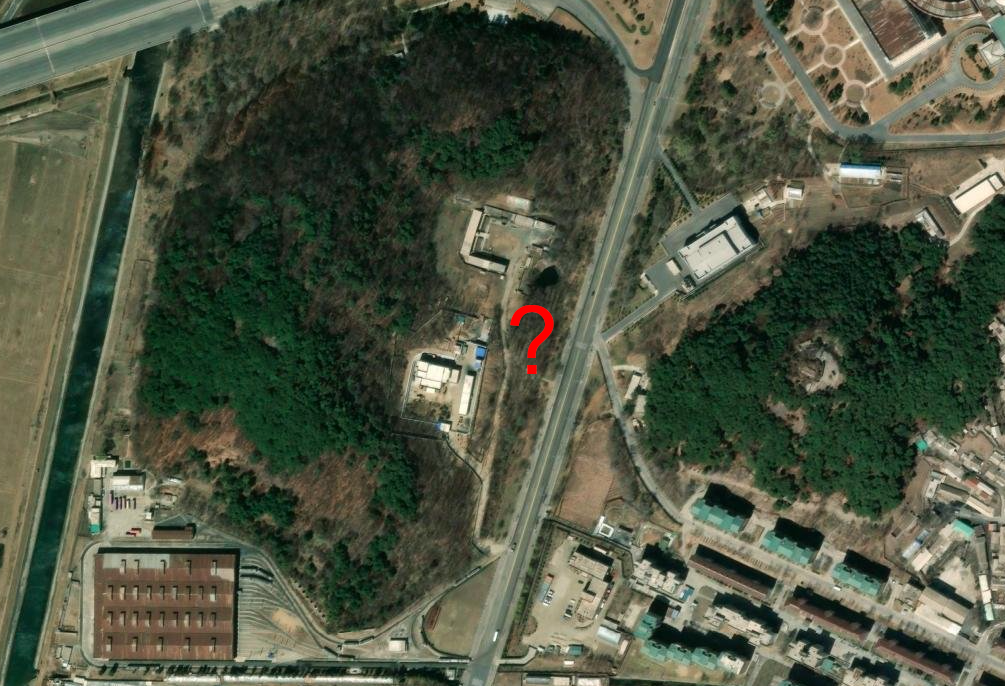
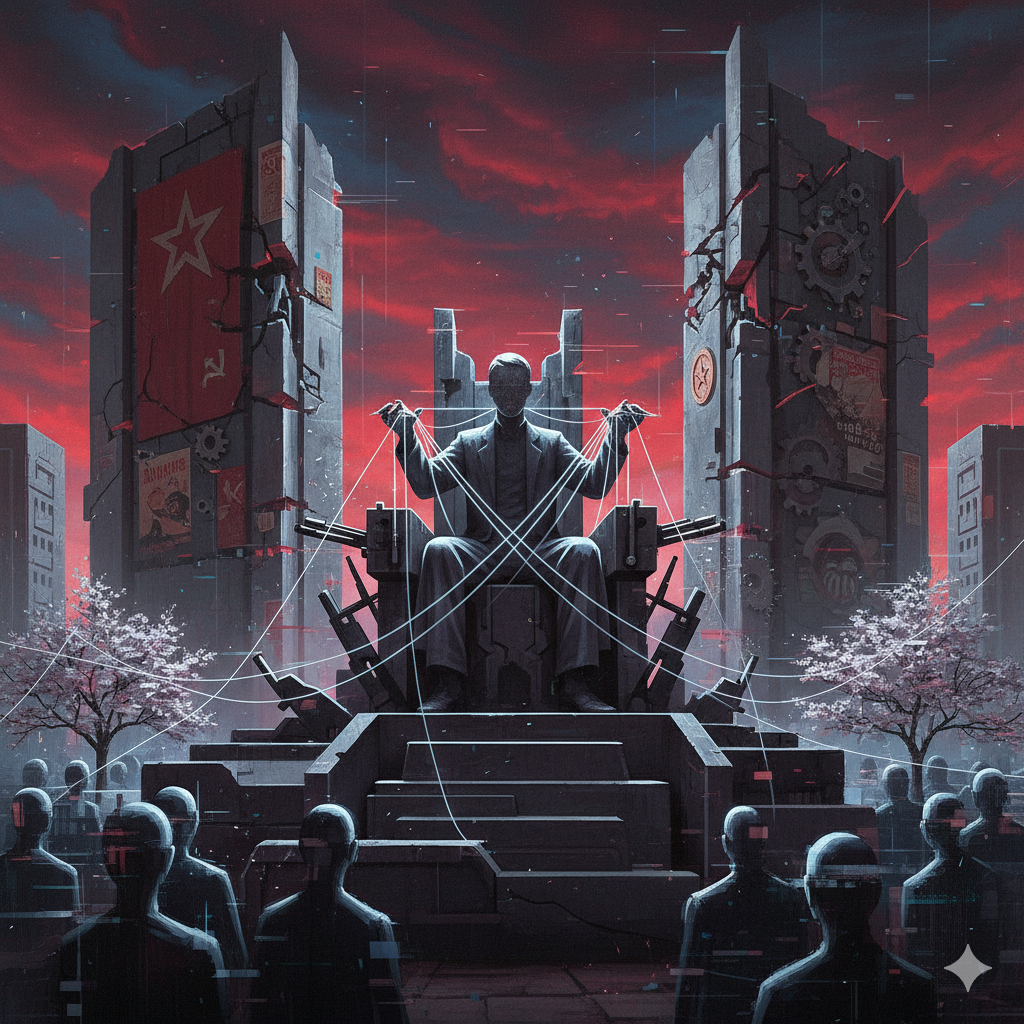
While it is only one part of the larger Pyongyang machine, Mangyongdae provides us with a unique glimpse into the complete militarization of North Korean society. Using the ideas of territorialization, the author attempts to levy criticisms not only against Juche but also more broadly against Kim Jong Un’s disingenuity and disregard for the theory that built his nation. This analysis aims to serve as a parallel to the DPRK’s internal decision-making processes, while acknowledging a variety of academic shortcomings in "Comrade Kim Jong-un's Revolutionary Thought".
As Kim Il Sung said, "Self-reliant defence is a military guarantee for a nation’s political independence and economic self-sufficiency" (On the Juche Idea, p.49), yet Kim Jong Un’s contemporary "Songun"-style approach, while advancing the state's weapons program, has yielded only minor breakthroughs in securing the nation's economic self-sufficiency. It’s notion of necessary adaptations is agreeable to the present condition: "The theoretical activities of our Party that has originally clarified revolutionary principles and ways to meet the demands raised by the revolutionary practice of our time, constitute a brilliant example in adhering to the revolutionary principles of Marxism-Leninism and developing the revolutionary theory of the working class onto a new, higher plane." (59) Unfortunately, the current leadership has failed to do so and has only continued to exhibit its fragility by implementing misguided revolutionary thought, restricting the true revolutionary potential of its people.
We believe Kim, as of now, hasn't done much to abide by the supposed guiding principles of Juche thought. The current dilemma exists between the people-first principles, and state-first principles; the JIIA provides a great overview of the situation at https://www.jiia.or.jp/en/column/2023/02/korean-peninsula-fy2022-01.html. They quote, "the our-state-first principle era is a new era of the Juche revolution ushered in by Comrade General Secretary, who upheld the people-first principle as the political principle of the Party and the nation, and made our republic a shining country of dignified people, a country of one mind and one heart, where ideological unification has been realized."
This reframes the relationship between people and state, as well as state and military away from its ideological core, and towards a model that reaffirms individual central power. Juche as guiding thought, and Songun as an implementation thereof exists only in the space of revolutionary action. The people guide the actions of the state, which guides the actions of the military, implementing the will of the people, their self-determination. The new system, the our-state-first principle, puts Kim Jong Un into the position of the people. Thus, KJU guides the actions of the state, which guide the actions of the military, which now guide the actions of the people. Despite the party's best attempts, we've found ourselves completely removed from even the most fundamental aspect of Juche, forget Marxist-Leninist thought. The Kim mafia, after decades of self-deification, has de-territorialized their Marxist-Leninist origins, and re-territorialized into absolute monarchy, a disgrace to any revolutionary potential Juche possessed.
Why is this important to Mangyongdae, the Diamond, or anything for that matter? The answer is a cult of personality. Kim is looking to cement himself into the history books of North Korea: the first satellite launches, extensive domestic agriculture and solar production, the (failing) modernization and expansion of the KPN, and much more. His desire to continuously reinforce the party propaganda machine allowed something crucial to slip through the cracks.
There is no Diamond, only an empty shell consuming and sustaining the cycle of the totalitarian State apparatus. Deleuze and Guattari describe this as “a rigid segmentarity and a particular mode of totalization and centralization.” (A Thousand Plateaus, p.214) Their analysis of the state as an “Apparatus of Capture” perfectly encompasses the position the Kim family and Party have found themselves in. From capturing the flows of the economy, to interpersonal connections and even language, the North Korean regime has “a war machine is installed in each hole, in every niche” of society, arguably constituting the Deleuzian definition of fascism. (214) KJU’s reshuffling of military and party dynamics serves as a stark reminder that even the most rigid apparatus requires continuous modifications of the spectacle. The “Body without Organs” is critical to this tender dynamic between divine freedom and divine control. It exists as an uninhibited plane of chaotic desires, yet the KWP tries to impose rigid structure, it attempts to stratify. Instead of a “Body without Organs” they desire a plane that we call the “Body of the Suryong”, an existence where all thought resides within the realm of the Supreme Leader, a desiring-machine without desire. If we believe the posits of A Thousand Plateaus, this is impossible, and this desire manifests itself in micro-flows of revolutionary de-territorialization. In this vein, North Korea’s narcotics black market potently represents both the desiring power of the people, yet also the stratifying power of the state. This dynamic exists in constant struggle for territorial power, does desire live, or does the machine die?
At last, we’re thinking it’s necessary to tie all of this theoretical nonsense back into actual intelligence applications. For example, the erection of monuments displaying KJU alongside his ancestors forces an acceptance of current conditions. The people’s will is now a manifestation of the State apparatus’ desire, no longer the other way around. We can confidently imagine that each organ of the state proudly displays its skin, each human effect traceable to the cause that is the will of the State. For each destroyed solar farm, we see an inner-city highrise. For every abandoned government building, we see three more departments created in its wake. Changes as miniscule as a garden’s addition at 39° 1'2.18"N, 125°41'53.40"E hold significant value in our understanding of a location’s power and purpose to the regime. The color of a rooftop, the shape of an entrance, the size of windows, each detail as small as a molecule, yet invariably fundamental to its entire molar organization. Following these lines and flows, “we can locate a "power center" at the border between the two, defined not by an absolute exercise of power within its domain but by the relative adaptations and conversions it effects between the line and the flow. ” (A Thousand Plateaus, p. 217)